Self-healing UX intelligence
Your app pays attention so you don't have to.
$ gyver --auto-heal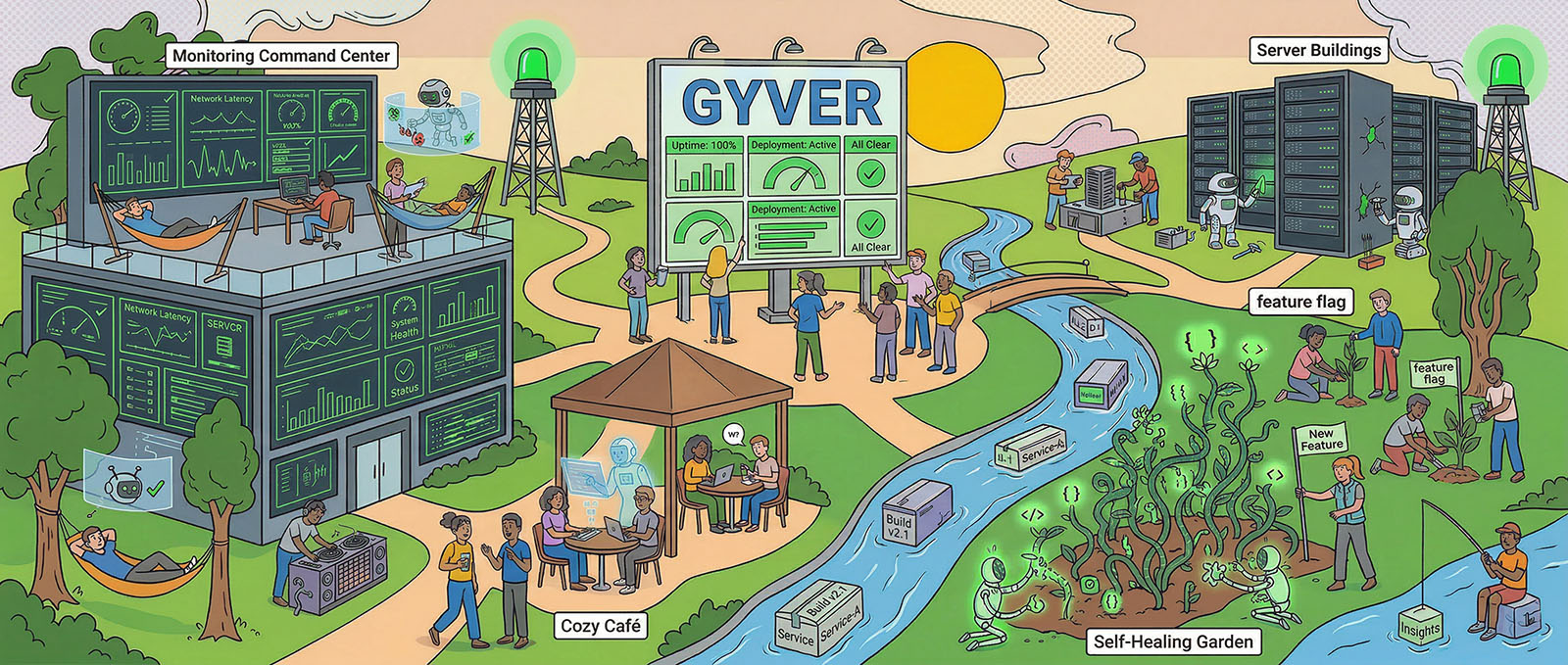

Captures sessions, collects user feedback and issues, collects feature requests, and autonomously diagnoses issues with AI – then delivers tested fixes and improvements as tickets and pull requests. All on your infrastructure.
How it works
Your app watches itself, finds its own bugs, and proposes its own fixes.
Capture
Browser SDK silently records user sessions – DOM events, network requests, console errors, screenshots, voice. One component, zero config.
Correlate
Rage click followed by a 500 error? The pipeline connects the dots across events to surface the real problems.
Diagnose
AI generates structured reports with root cause, severity, affected files, and a suggested fix. Claude or GPT, your call.
Heal
Creates GitHub issues and draft PRs with suggested code changes. You review, tweak, merge. Gyver never pushes to main.
Users give you friction. Gyver gives you features.
Sessions captured. Issues detected. Tickets filed. PRs shipped. Autonomously.
See it in action
A dashboard to review, a CLI to orchestrate, and an embeddable widget your users actually see.
Dashboard
CLI
Widget
Built different
From session capture to pull request – everything Gyver does for you.
Zero-config capture
One wrapper component. Full session replay, rage clicks, network errors, console logs, and screenshots. The SDK captures everything silently.
Voice-guided feedback
Users narrate what went wrong while browsing. Whisper or Mistral transcribes their voice into structured, actionable items – no typing required.
AI that reads sessions
AI reads the full session context like a detective novel – root cause, severity, affected files, and a suggested fix.
Straight to pull requests
Gyver opens a GitHub issue with reproduction steps and a draft PR with suggested code changes. You review, tweak, merge. Gyver never pushes to main.
MCP orchestration
Expose sessions, reports, and health data to Claude Code and other AI tools via MCP. Triage, explain, and fix – right from your IDE.
Privacy by design
Built-in consent state machine. Users opt in, data gets anonymized. Session data never leaves your servers – no third-party cloud, no vendor lock-in.
Bring your own everything
Gyver plugs into what you already run. Pick your stack – Gyver adapts.
Frameworks
- React
- Vue
- Angular
- Sveltesoon
- Astrosoon
Server
- Express
- Next.jssoon
- Fastifysoon
- Honosoon
Databases
- PostgreSQL
- MySQL
- Firestore
- SQLitesoon
- ClickHousesoon
- Supabasesoon
AI & Voice
- Claude
- GPT
- Whisper
- Ollamasoon
- Geminisoon
Repositories
- GitHub
- GitLabsoon
- Bitbucketsoon
Storage
- S3
- DO Spaces
- MinIO
- B2
- R2soon
- GCSsoon
- Firebasesoon
Get started
One command. Gyver scaffolds your config, picks your adapters, and connects everything.
$ npx gyver initWorks with React, Vue, Angular. Express, Fastify, Hono. PostgreSQL, MySQL, Firestore. You choose – the CLI asks.
For developers, solo builders & small teams
A solo builder's dream come true
Stop chasing bugs. Start shipping features. Gyver watches your app so you don't have to.